The decline of third places: why they fade, and what brings them back
By Tully Zeitlin · Published
The decline of third places shows up in the time-use data before it shows up on the street. On an average day in 2025, 30 percent of Americans spent time socializing and communicating, down from 38 percent in 2015, and the people who did spent 35 minutes at it, down from 41 (Bureau of Labor Statistics, American Time Use Survey). Third places are not dying because people stopped wanting them. They fade when nobody gives people a reason to be in the same place at the same time, and they come back when somebody does. What a third place is, and why a town needs one, is on the third place guide.
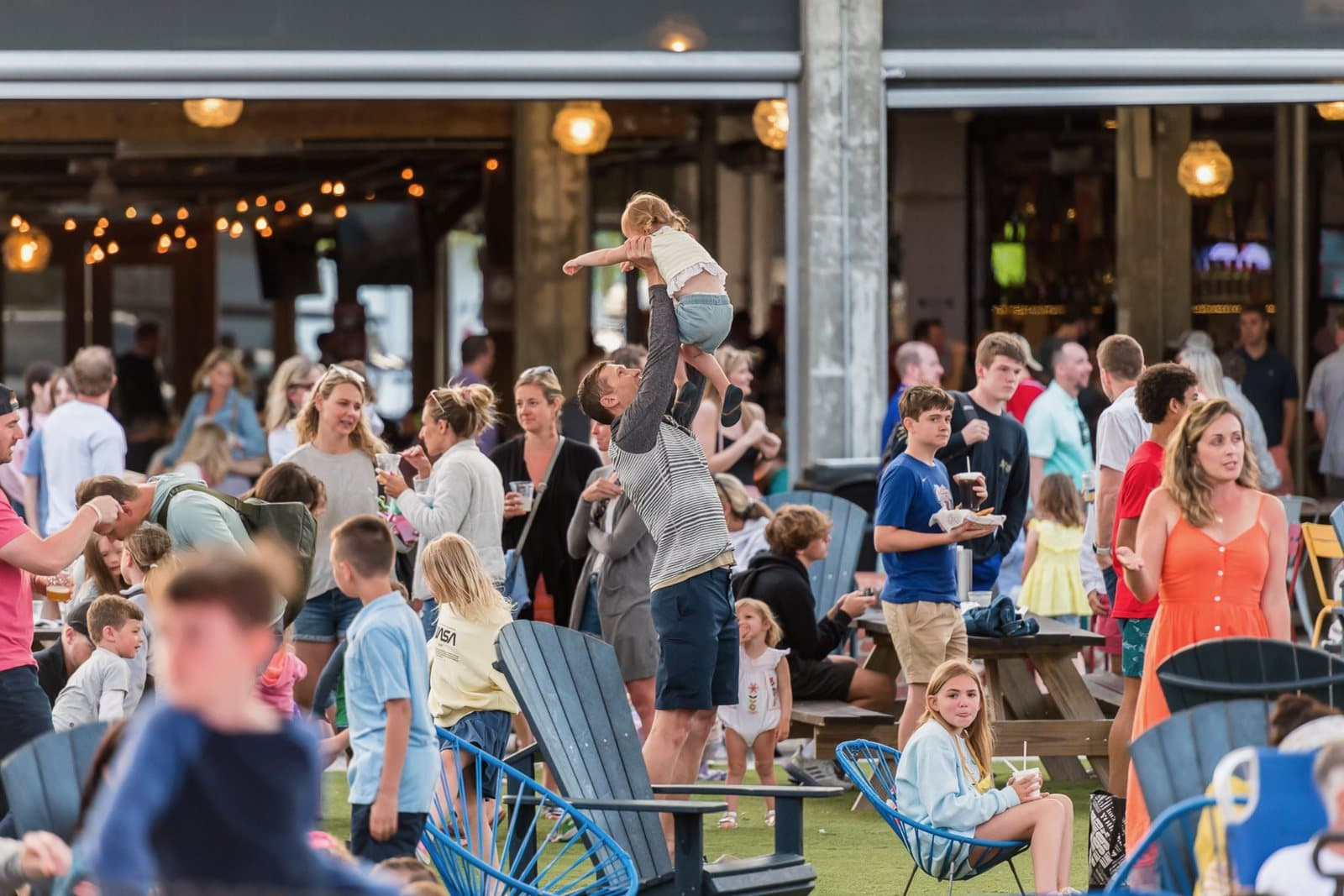
What a third place is
The sociologist Ray Oldenburg named the idea in The Great Good Place (1989): a generic designation for a great variety of public places that host the regular, voluntary, informal gatherings of people beyond home and work. His examples were bars, coffee shops and general stores, and in a longer list lounges, taverns, doughnut shops, pool halls, bingo halls, lodges and youth recreation centers. The traits he gave them matter more than the list. A third place is on neutral ground. Conversation is the main activity. Strangers are welcome, and the regulars feel rooted there. People feel the warmth and belonging they would feel at home. Every one of those traits is something a place does, week after week, and none of them is something a place has on the day it opens.
Are third places dying? The decline of third places in numbers
The time-use numbers above say use is thinning. The access numbers say the places are thinning too. In the Survey Center on American Life's 2024 American Social Capital Survey, as reported by Washington Monthly, fewer than half of Americans said people in their community could gather at restaurants or diners (46 percent) or at coffee shops and cafes (41 percent). Twenty-one percent live in communities with no access to such gathering places at all, another 36 percent have minimal access, and only 18 percent have extensive access. The gap shows in who has somewhere to go: in very high-amenity areas, 75 percent say they have a local hangout, against 23 percent in low-amenity areas. So the honest answer to the question is that access is thinning in many places and use is thinning everywhere, including in the places that still have the buildings.
Why third places fade
The buildings are not the problem. Almost every project built today is pitched as placemaking. The lawn is poured, the stage is wired and the renderings are full of people. Then the ribbon is cut and the calendar stays empty, not because the owners stopped caring but because nobody on their team has that job. Property teams run the property. Leasing leases. There is no department for Saturday night. Oldenburg's traits, the regulars, the conversation, the belonging, are habits, and a habit needs a reason to start and a reason to repeat. A plaza with nothing on Tuesday is a plaza.
What brings third places back
A reason to come back, on a schedule. Every calendar we build stands on one architecture: a weekly rhythm people can count on, monthly anchors that spike traffic, and seasonal tentpoles that put a place on the map, drawn from a working catalog of 150-plus formats across twelve categories, tuned to each property, its tenants, and its seasons. Visits become habits: the same good night every week, and a reason to come back on the others. The layered draw: a movie night is never just a movie. Programming is the first engine: it creates the draw. Community engagement is a second lever: corporations who bring us their annual traditions, charities who build their biggest nights with us, and schools, academies and arts organizations whose recitals and showcases need a stage. Those events happen every year. The only question is where. Nobody in a hurry to leave is the outcome, and it is measurable: at our own venues the measures were traffic and sales, orders and receipts on programmed days against the days without.
Where we learned it
It started with one question: what if a place delivered a festival every day? We created The HUB on 30A near Seaside and Rosemary Beach in 2014 and expanded to North Dallas in 2022. After more than a decade operating The HUB and producing thousands of events, we launched The HUB Experience Company, focused on creating the programming, activations, events, and experiences that make destinations truly come alive. A third place, it turns out, is less a building than a habit that a building makes possible. You create the place. We create reasons people want to be there.
For the people who own the lawn
If you own a plaza, a lawn, a center or a downtown, the third place is on your ledger too. The economics land on your P&L, not just a marketing line: increased traffic, longer dwell times, higher sales per square foot, stronger tenant retention, higher rents, faster leasing, renewed community relevance. That is what the experience layer is for. Advertising fades. Experiences stay. See how year-round event programming runs, read why the experience economy is physical, or find your buyer type under who we work with.
Frequently asked questions
What is a third place?
Ray Oldenburg's term, from The Great Good Place (1989), for the public places that host regular, voluntary, informal gatherings beyond home and work: bars, coffee shops, general stores, lodges, recreation centers. The marks of one are neutral ground, conversation as the main activity, regulars who feel rooted there and strangers who are welcome.
Why are third places declining?
Two things are thinning at once. Use: on an average day in 2025, 30 percent of Americans spent time socializing and communicating, down from 38 percent in 2015 (Bureau of Labor Statistics). Access: 21 percent of Americans live in communities with no gathering places at all, by the Survey Center on American Life's 2024 measure. And the new places that are built are often not programmed, so nobody has a reason to return on a Tuesday.
Are third places dying?
The habit is weaker and the access is uneven, but the demand is intact: people come back to the places where something is happening. Third places die when the calendar is empty and return when it is full.
What is "the death of the third place"?
The phrase people use for this trend: the coffee shop that closed, the bar that is now a bank, the plaza nobody crosses. In our experience the death is rarely the building. It is the calendar.
How do third places affect loneliness and friendship?
People with no access to gathering places are more than three times as likely to have no close friends, 32 percent against 9 percent in the most amenity-rich communities, in the Survey Center on American Life's 2024 American Social Capital Survey as reported by Washington Monthly. A place where people meet on a schedule is where friendships get made.
Can a shopping center or a mixed-use plaza be a third place?
Yes, if it behaves like one: neutral ground, a reason to come on a schedule, regulars, conversation. A center or a plaza with a weekly rhythm, monthly anchors and seasonal tentpoles meets Oldenburg's traits. One with a lawn and nothing on it does not.
KEEP READING