Event sponsorship for places: turning a year-round calendar into sponsorship opportunities
Event sponsorship for a place is different from event sponsorship for a single night. A programmed property has sponsorship opportunities the day its calendar exists: a named weekly series, a season title, the presenting sponsor of a tentpole, the market, the movie night, and a reliable crowd in front of all of them. The HUB Experience Company is a placemaking and event programming company for real estate owners and developers. Sponsor and partner development is part of the programming work. This page explains what event sponsorship is at a programmed place, what a sponsor gets, what sponsorship activation means in its industry sense, and who builds and sells it.
What event sponsorship is at a programmed place
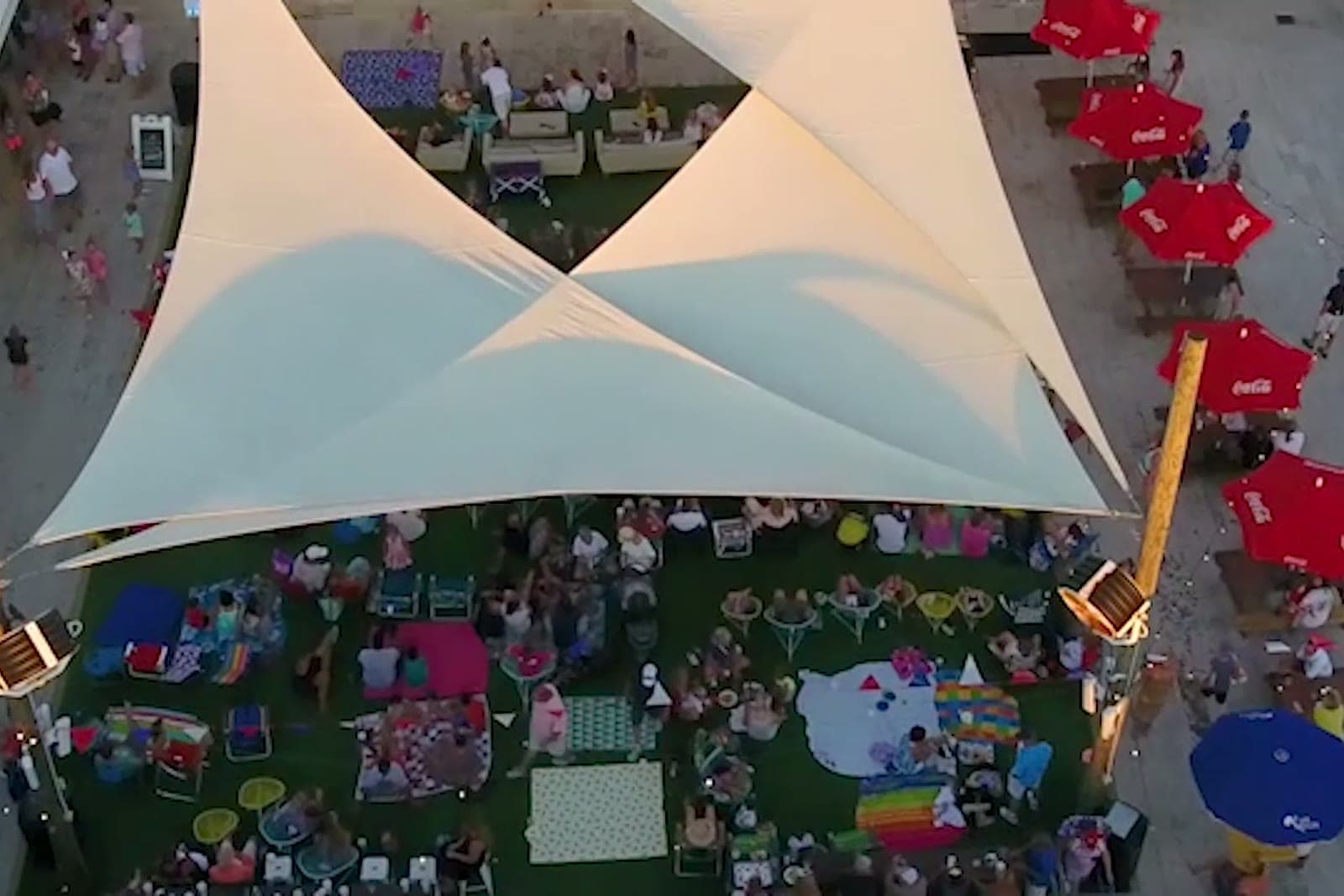
Brands looking to support the events in front of a reliable crowd: sponsor-titled series, holiday partnerships, product moments. A sponsor supports a series or a season with its name on it, and the inventory a programmed property holds is the calendar itself: a named series, a season title, a tentpole presenting sponsor, the market, the movie night. It is your brand and your place, so you approve every sponsor on the calendar, and we keep each one true to the place.
Why a sponsor wants a place, not an impression
Memory is the last channel that still works: advertising fades, experiences stay, the repeat visit, the recommendation, the shared story. Industry-reported figures put in-person experience at three to eight times the memorability of digital advertising. People spend hours at a programmed place, not seconds scrolling. Sponsors want a real experience to attach to, not a logo placement, and the programmed calendar is where that experience already has a crowd. Sponsors notice the crowds and come looking to support the events.
Sponsorship activation, in the industry sense
Sponsorship activation is the industry's name for what a sponsor does at the event once the sponsorship is signed: the tent, the sampling, the photo moment, the thing the crowd can do. For example, a brand might run a sampling tent or a photo moment at a programmed night. That is the activation, and it belongs to the sponsor. We plan and run the programming it sits inside, and the owner approves it. A festival is a sponsor surface that sells when the sponsor gets a real experience inside it, and so is a weekly night.
Sponsorship opportunities a programmed property holds
The title of the weekly series, for a season of dates.
The presenting sponsor of the season's tentpole: the fall festival, the tree lighting, the summer kickoff.
The market, weekly or monthly, with the sponsor's tent at the entrance.
The movie night, with the product moment before the feature.
The family zone at the festival or the family night on the green.
The watch-party series on the big nights.
The holiday partnership, with the sponsor's experience inside the season's calendar.
The community partnership: the team night, the benefit night, the recital, with the sponsor recognized from the stage.
Hospitality on the biggest nights.
How a package is built from that list is on sponsorship packages. How a property finds and signs a sponsor is on how to get sponsors for an event.
Scale is what makes event sponsorship real
Sponsorship follows the crowd. A single night is a small ask; a named series with a season of dates and a crowd that shows up every week is a real one, and a brand's attention follows that scale. The calendar is built first, on the owner's objectives and budget, and sponsorship follows the crowd it gathers; we do not plan a calendar on the assumption that sponsors will carry it.
Who builds and sells it
We plan, book, and produce. The vendor network, the talent, the sponsors, the schedule, built and running today. The part nobody wants to build in-house. Sponsor and partner development is part of the monthly programming work at the properties we run, alongside the quarterly calendar planning and booking, the daily call sheets and the event production, and the sponsor conversation starts with the calendar rather than after a second hire, because an events hire rarely sells sponsorship. We are not a marketing agency, and we do not run campaigns. A sponsor's own case for being at a programmed place is on brands, a hotel's on hotels and resorts, and the festival version on festivals. What we run is year-round event programming, through the five phases on how event programming works.
Frequently asked questions
What is event sponsorship?
A brand supporting an event, a series or a season in return for its name and presence at it. At a programmed place the inventory is the calendar itself: a named weekly series, a season title, the presenting sponsor of a tentpole, the market, the movie night, each in front of a crowd that shows up every week.
What is sponsorship activation?
The industry's name for what a sponsor does at the event once the sponsorship is signed: the tent, the sampling, the photo moment, the thing the crowd can do. It belongs to the sponsor, it sits inside the programming, and the owner approves it.
What sponsorship opportunities does a programmed property have?
The series title, the tentpole's presenting sponsor, the market, the movie night, the family zone, the watch-party series, the holiday partnership, the community partnership and hospitality on the big nights. The package is built from the calendar and the crowd it draws.
Who sells event sponsorship at a programmed property?
Sponsor and partner development is part of the monthly programming work at the properties we run, so the sponsor conversation starts with the calendar. You approve every sponsor on the calendar. We are not a marketing agency, and we do not run campaigns.
Is sponsorship the same as a brand experience?
Related, not the same. A sponsor supports a series or a season with its name on it. A brand experience is the brand itself at the day: the sampling tent at the market, the product moment at the movie night. Many brands do both. The brand's side is on brands.
Does sponsorship cover the programming?
Sponsors support the events; they do not run the calendar. The calendar is built first, on the owner's objectives and budget, and sponsorship follows the crowd it gathers. We do not plan a calendar on the assumption that sponsors will carry it.
Get in touch.
Tell us about the place. We listen first, propose what fits, and shape the engagement around what you actually need.