Shopping center event programming that brings people back, week after week.
Shopping center event programming is the year-round calendar that gives a retail or lifestyle center a reason to be visited on a Tuesday, not only on the big weekends: a weekly rhythm, monthly anchors and seasonal tentpoles, planned and run by one team behind your brand. The HUB Experience Company plans and runs that calendar for the owners of shopping centers and lifestyle centers, one of the buyers we work with. You own the center. We make it the place people want to spend the day.
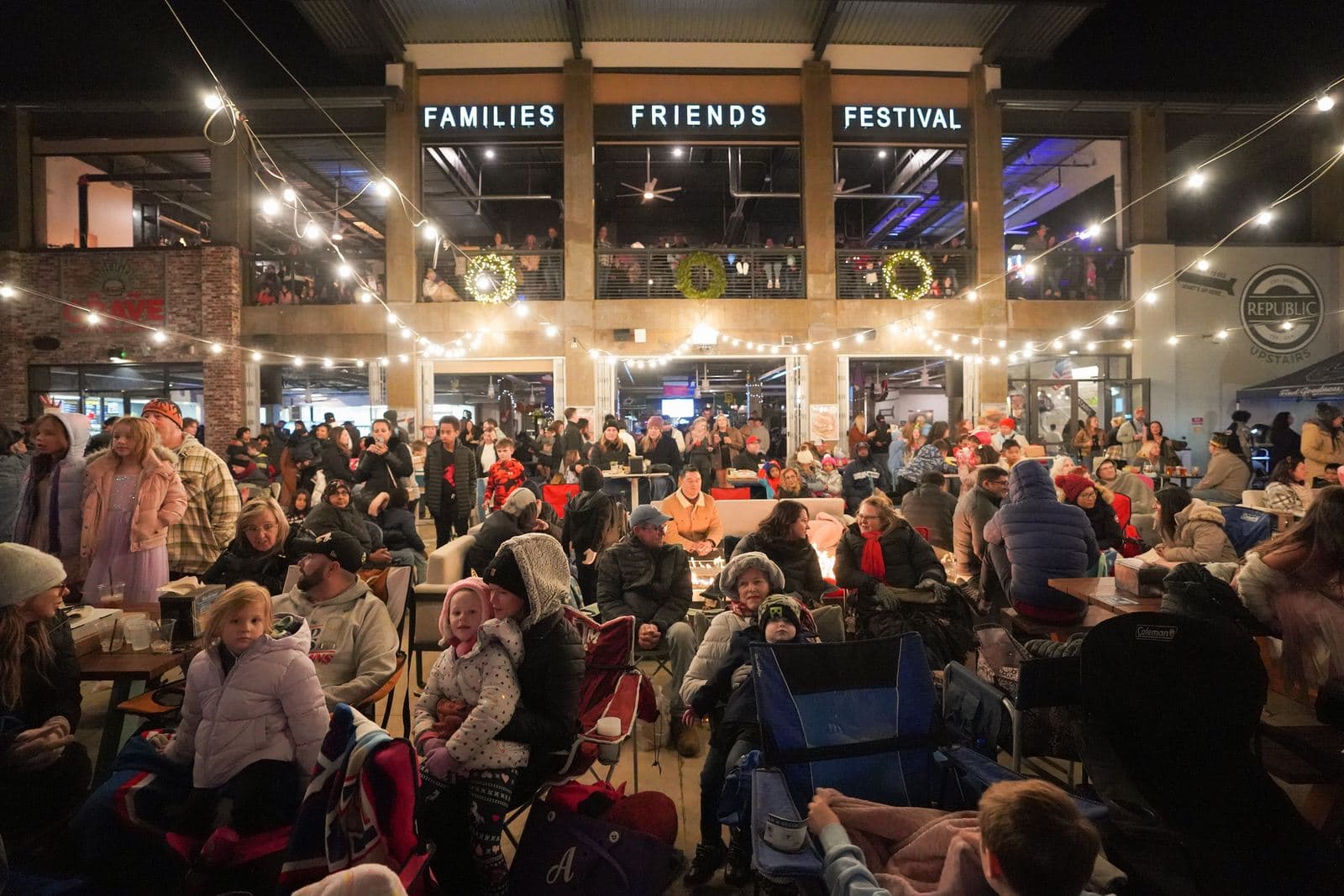
Shopping center event programming on the landlord's ledger
For a retail center the measures are traffic, dwell and tenant sales per square foot, and differentiation when every center is fighting for the same consumer. Programmed days fill the restaurants and storefronts; people who come for one thing stay for the evening. Tenants who see the traffic stay, and the place earns its rents.
At our own venues the measures were traffic and sales: orders and receipts on programmed days against the days without. The same measures work at your center, on the numbers you already run it on: tenant sales, traffic, and the growth of your audience on email, text, and social.
Smaller, more often, through the week
Big signature nights draw a crowd. Tenants at a programmed center tend to ask for something else: smaller events, more often, through the week, because that is what moves their sales. The weekly rhythm does the heavy lifting: an acoustic set on the patios as the day cools, a trivia or game night built with a restaurant tenant, a family evening with a movie and a character moment, a market morning for local makers. Each one is small, inexpensive, and placed on the nights the tenants need it most. Festivals layered in so there is something for everyone, and memorable experiences that drive more traffic long term.
We build events with the restaurants and shops rather than around them. The food is programming. A tenant's own jazz night gets a band, and the follow-up call after the event asks one question, did it work for you? Markets and pop-up retail incubators prove demand categories for future leasing.
Retail activation across the whole center, not one storefront
Most of what is written about experiential retail is about the store. A center owner's question is different: how do you program experiences across the whole property so every tenant benefits? Retail activation at center scale means the green, the main street and the plaza become the stage, and the tenants are paired into every moment: a featured pour or bite, sidewalk sales beside the makers market, a themed menu on the watch-party night. Our guide to experiential retail covers the definition, the examples and the statistics. This page is about running it.
What a month can hold
An illustrative month at a lifestyle center, drawn from our working catalog of 150-plus formats across twelve categories:
A golden-hour acoustic set on the patios, a named weekly series, with a restaurant tenant's featured pour or bite.
Family movie night with a character moment and face painting, with kids-eat specials timed to the crowd.
Lunch on the green, a solo act for the office crowd.
A makers market of fifteen to twenty local vendors, with the retail tenants' sidewalk sales, and no food that competes with the restaurants.
Yoga on the lawn with a tenant studio, then brunch.
A tenant night: a restaurant's own trivia or jazz night, amplified.
A festival day: a full band, a themed market, kids' activations and a brand partner.
A watch party on the big game, with a themed menu, and a community day with a dog adoption, a dance-school showcase, or a school band on the stage.
Sample formats, not a calendar. The real calendar is built with your team in the Discovery and Setup Month, so this is illustrative only.
How the engagement works
Who books the vendors and makes sure they show up? We do. Tully Zeitlin, our Chief Experience Officer, leads programming and every vendor and talent relationship, the way we have for eleven years and thousands of events. A detailed quarterly plan, with its budget, comes to your team for approval, plus a full-year view for the tentpoles. A daily call sheet runs every event day. The ground game is your choice: we staff it end to end, or your on-site team runs our call sheet as written and our market manager stays on call.
With your go-ahead, we work with tenants directly: the walkthrough, the ideas they bring, and a check-in after each event asking whether it worked for them. Everything is reported back to you. Your brand stays yours. Everything we build for you is unique to your properties, and we do not run the same playbook at a competing property down the street. Your calendar should feel special and curated, because it is.
The same operating model scales from one center to many without adding headcount on your side: one experience team plans across the portfolio, and each center carries its own executor rather than a full programming department. That is how a standard set at a flagship travels to the centers that cannot each carry their own team. Our involvement can range from one season at one center to serving as an embedded operating partner for a property or portfolio. The five phases are the same at any size; read how event programming works. The ground floor of a mixed-use development and the street retail around an office property run on the same tenant-sales logic.
What we are not
We are not a staffing group that executes someone else's idea, and we are not a planning group that leaves you a document. We are not a marketing agency; promotion is scoped and priced as its own service when you want it, and your brand approves all of it. We do not advise on real estate strategy. And we do not bill ourselves as the people to call for one concert.
Frequently asked questions
Who plans and runs year-round events at a shopping center?
The HUB Experience Company does, as an operating team behind yours. We plan, book, and produce; the vendor network, the talent, the sponsors and the schedule are built and running today. Whether that beats building an events department of your own is the question we answer in in-house or outsourced event programming.
What is retail activation, and how is it different from experiential retail inside a store?
Experiential retail inside a store is the retailer's job. Retail activation is the landlord's: programming the common areas, the green and the main street so the whole center draws, and pairing the tenants into every moment so the traffic lands on their registers.
Do events actually drive tenant sales?
The ones built for it do. Small events through the week, placed on the nights the tenants need them, with the tenants paired in, move sales in a way one big signature night often does not. We measure it the way we did at our own venues: orders and receipts on programmed days against the days without.
How do you protect the center's brand?
You keep the brand, the voice, and the final say on every line of the calendar. Everything we build for you is unique to your properties, we keep a deliberately small client list, and we do not run the same playbook at a competing property down the street.
Who deals with the vendors?
We do. Sourcing, booking, scheduling, coordination and the day-of call sheet are ours to carry, so the vendor work never lands on your team.
Can this run across a portfolio of centers?
Yes. One experience team plans across the portfolio, each center receives its own plan and call sheets, and each carries a single local executor rather than a programming department. We would start one center at a focused cadence and scale from there.
Get in touch.
Tell us about the center. We listen first, propose what fits, and shape the engagement around what you actually need. Our event programming page covers what we run.