Hotel non-room revenue: how a calendar of events fills the outlets
By Tully Zeitlin · Published
Hotel non-room revenue is everything a property earns beyond the room: food and beverage at the bar, the restaurant and the pool outlet, private and corporate events, and the partners a programmed property attracts. Events add to it by giving locals a reason to come in and guests a reason to stay on property, on the nights the outlets need them. This page explains where that revenue comes from, what a calendar built for it looks like, and how to read the result on the hotel's own numbers. The engagement itself is described on our page for hotels and resorts.
Why hotel non-room revenue matters more when rooms slow down
A hotel can run strong occupancies and still have outlets that go quiet in the off-season. When rooms growth is thin, the outlets are where a property still has room to grow. CBRE's analysis of its survey hotels, published in Lodging in 2025, found food and beverage revenue per occupied room up 3.8 percent in the first half of 2025, ahead of the 3 percent increase in total hotel revenue over the same period, and food and beverage department profit margins up from 28.7 percent in the first half of 2024 to 29.1 percent in the first half of 2025. Source: Lodging Magazine, "A Bright Spot in 2025". Those are industry averages across many hotels, not a promise for any one property. They do say where the growth is.
For a hotel the measures are non-room revenue, rate support, food and beverage traffic from non-guests, and a property that becomes the destination, not the place people stay while doing something else.
Hotel ancillary revenue, line by line
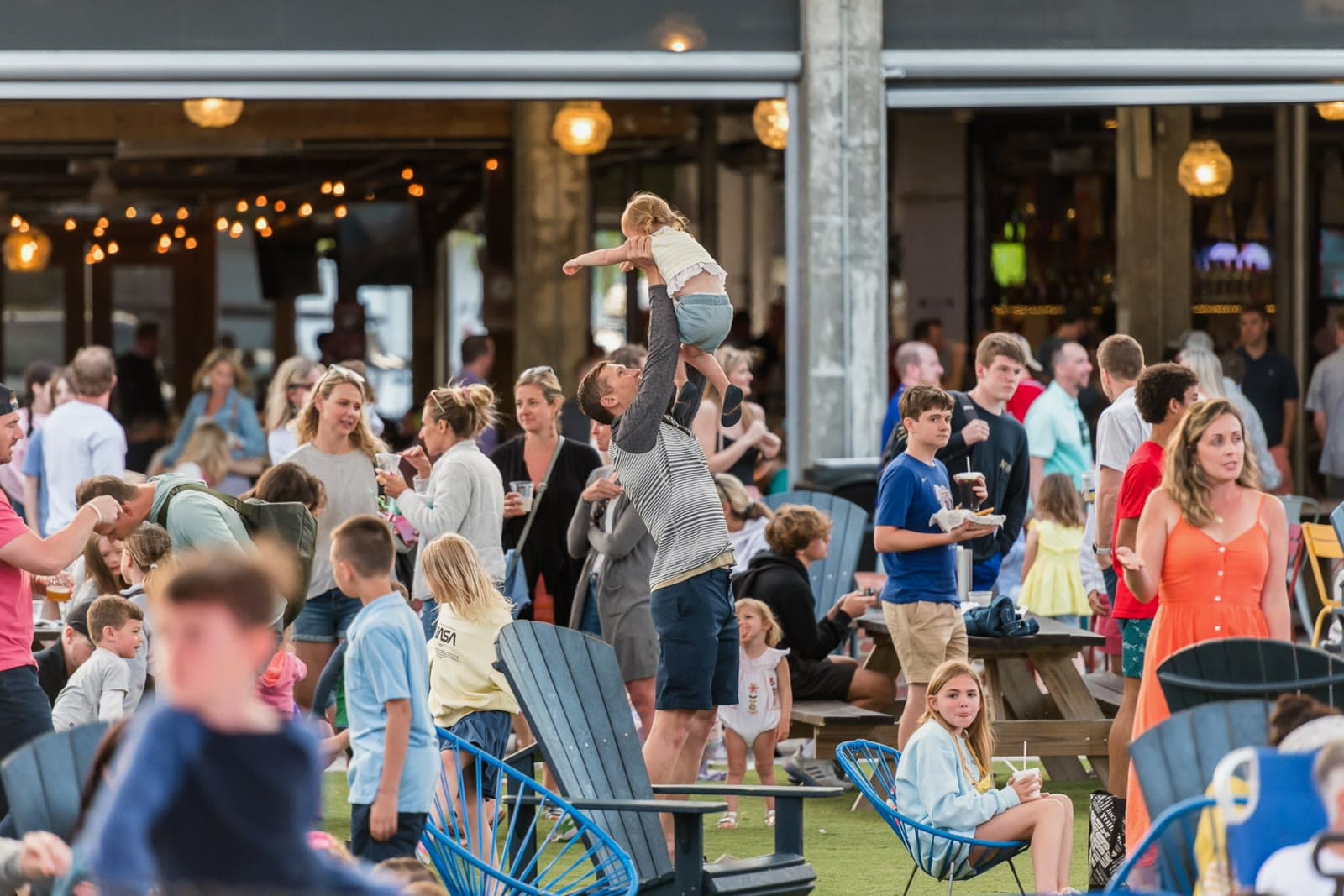
Food and beverage from locals is the first line. In the slow months the neighbors are the customers who are still in town, and they need a reason to come in, sit down, and order. Food and beverage from guests is the second: a guest with something to do on property at seven o'clock eats and drinks on property instead of in town. The calendar sends people to your outlets alongside everything else it does for the property. No outside food vendors competing with your own.
Private and corporate events are the third line. A property with a stage, a lawn and a calendar people have heard of is the property the company picks for its holiday party and the family picks for the reunion. Corporate and private revenue follows a public calendar more often than it leads one.
Partners are the fourth. A programmed property has an audience, and the local businesses and brands who want to be in front of it will put their names on the summer series or the family night. That is a line most hotels do not know they have, and it is scoped on its own, never assumed.
How to increase hotel revenue with a calendar, not a campaign
Live music on the stage every week, a local act at golden hour that people can talk over. A family night with a movie and a character moment. The big games on the screen, with the food to match. Festival days built in layers across the property: the band on the stage, a market, the kids' activities placed where they belong. The season's moments, the playoffs and the big game, a spring kickoff for the families, booked far enough ahead that your sales team can sell them to the groups coming in.
Groups come first. When a group owns the property, the calendar steps back, or becomes something the group can buy into. Resort programming follows the property's seasons: the calendar leans into the quiet months and steps back when the groups arrive. Every calendar we build stands on one architecture: a weekly rhythm people can count on, monthly anchors that spike traffic, and seasonal tentpoles that put a place on the map, drawn from a working catalog of 150-plus formats across twelve categories, tuned to each property, its tenants, and its seasons.
Reading hotel non-room revenue on the property's own numbers
We judge a season on the hotel's own numbers: food and beverage at the outlets on programmed days against comparable days, local traffic, and the growth of your own list. At our own venues the measures were traffic and sales: orders and receipts on programmed days against the days without. The same method works at a hotel with the reports the property already runs: outlet covers and checks by night, the share of covers from non-guests where the system captures it, and private-event bookings by month. Measured, not modeled.
Who runs it on a lean property team
We do. Tully Zeitlin, our Chief Experience Officer, leads the program planning and the booking of acts, vendors, and partners, the way we have for eleven years and thousands of events. Every event day has a call sheet. When you want us on the ground, our experience manager runs it with the person or people you name on site. Your team approves the program and its budget and keeps the final say on everything that runs. We built this as owner-operators of entertainment venues, restaurants and bars over eleven years where every event had to earn its keep.
The five phases are described on how event programming works, and whether a calendar like this beats building the role in-house is the question we answer in in-house or outsourced event programming. The private-event side of the ledger has its own page under private events.
Frequently asked questions
What is hotel non-room revenue?
Everything a hotel earns beyond the room: food and beverage at the bar, the restaurant and the pool outlet, private and corporate events, spa and activities where the property has them, and partners who pay to be in front of the property's audience.
What is hotel ancillary revenue?
The same thing under its accounting name. Ancillary revenue is the revenue a hotel earns from departments other than rooms. Food and beverage is usually the largest of them, which is why a calendar built to fill the outlets is the most direct way to move it.
How do events increase hotel revenue?
They bring locals in to eat and drink on the nights the outlets need them, they keep guests on property in the evening, and over time they make the property the one people pick for their own events. The result is read in food and beverage on programmed days against comparable days and in private-event bookings by month.
Does programming compete with group business?
No. Groups come first. When a group owns the property, the calendar steps back, or becomes something the group can buy into, and the season's moments are booked early enough that your sales team can sell them to the groups coming in.
Which months should a hotel program?
The hotel's quiet ones. Resort programming follows the property's seasons, so the calendar leans into the off-season months when the outlets need locals, and steps back in the weeks the groups own.
Get in touch.
Tell us about the property. We listen first, propose what fits, and shape the engagement around what you actually need.