Retailtainment: what it is, and what it looks like across a whole center
By Tully Zeitlin · Published
Retailtainment is the use of ambience, emotion, sound and activity to get customers interested in the goods and in a mood to buy, in the definition the sociologist George Ritzer gave it in 1999. At a store it is the brand's in-store event. At a shopping center it is the landlord's year-round calendar on the lawn and in the common areas, live music, markets, movie nights, holiday programming and watch parties, so the whole property is the draw and every tenant shares it. The wider case for the landlord is on the experiential retail guide.
Where the word comes from
Ritzer wrote the definition above in Enchanting a Disenchanted World: Revolutionizing the Means of Consumption (1999). The term also goes by inspirational retailing and entertailing, and the broader description is the modern trend of combining shopping and entertainment opportunities as an anchor for customers. Later writers kept the same center of gravity: Codeluppi (2001) described it as offering the consumer physical and emotional sensations during the shopping experience. Every one of those definitions is about a store. None of them is about a center.
Store-level retailtainment and center-level retailtainment
Nearly everything written about retailtainment is about the store: the flagship with the climbing wall, the launch party, the in-store demonstration. That is real and it belongs to the brand. The center is a different unit. A landlord does not sell goods. It sells a reason to come to this property instead of the one across the highway, and then it collects the result in tenant sales, dwell and renewals. Center-level retailtainment is the calendar that gives people that reason every week, run from the common areas, and it is the part of the category almost nobody writes about, because almost nobody runs it.
Why retailtainment matters on the landlord's ledger
Placer.ai's 2025 dwell data shows the difference in minutes. In 2025, 37.6 percent of indoor mall visits lasted more than 75 minutes, against 33.4 percent at open-air centers, and open-air centers had the highest share of visits under 30 minutes, at 36.8 percent. The quick trip is the open-air center's default, and the long visit has to be earned. Placer.ai's recap of 2025 credits the open-air format's holiday quarter, with fourth-quarter visits up 2.0 percent year over year, to sit-down and alcohol-forward dining options that attract social holiday visits, and its advice to indoor malls is to double down on experiential retail, entertainment, and family-friendly programming. Food is programming too.
The audience is there. In the International Council of Shopping Centers' 2018 survey of Gen Z shoppers aged 13 to 19, 97 percent shopped at malls and physical stores, averaged 8.6 mall trips in three months, and gave the ability to socialize as a top reason (58 percent) alongside seeing the item in person and getting it immediately. That cohort is now in its twenties. What the landlord collects is on its own ledger: increased traffic, longer dwell times, higher sales per square foot, stronger tenant retention, higher rents, faster leasing, renewed community relevance.
What retailtainment looks like across a whole center
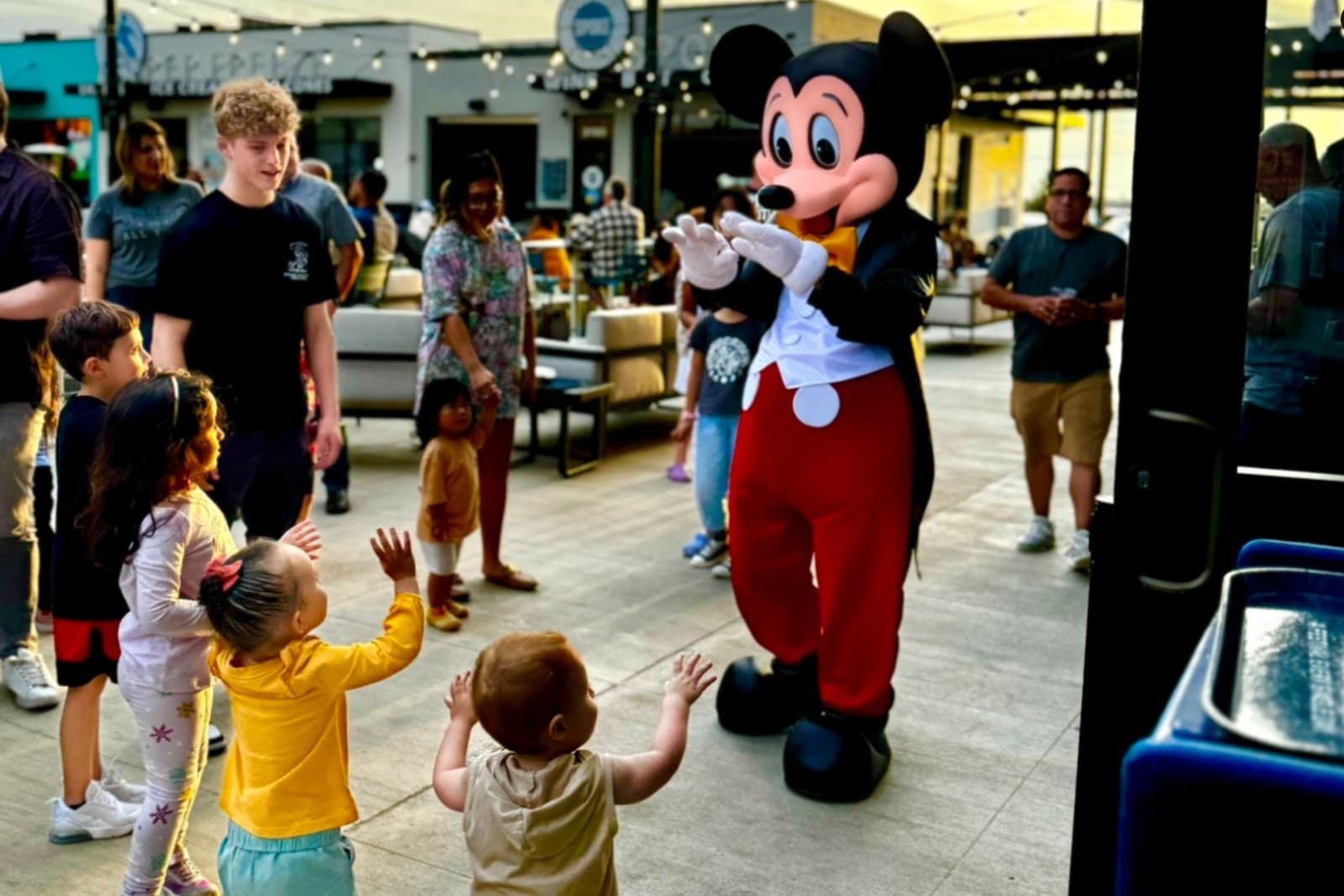
Every calendar we build stands on one architecture: a weekly rhythm people can count on, monthly anchors that spike traffic, and seasonal tentpoles that put a place on the map, drawn from a working catalog of 150-plus formats across twelve categories, tuned to each property, its tenants, and its seasons. On a center that looks like Friday live music on the lawn, a Saturday market with the tenants selling into it, a movie night with a food row and a vendor row around the screen, watch parties for the games the town cares about, the tree lighting and the holiday weeks. A movie night is never just a movie. Then there are the nights that are somebody else's tradition: corporations who bring us their annual events, charities who build their biggest nights with us, and schools, academies and arts organizations whose recitals and showcases need a stage. Those events happen every year. The only question is where. Tenant collaboration runs through all of it, because a center's retailtainment is only worth running if the tenants sell more on programmed days than on the days without.
What it takes to run it every week
We plan, book, and produce. The vendor network, the talent, the sponsors, the schedule, built and running today. The part nobody wants to build in-house. We run execution on paper: a detailed call sheet for every event day, down to where the vendor sets up and when the water gets to the band. The ground game is your choice: your own team on the ground, or experience managers we staff, whichever fits each event. One line of communication. One calendar, one call sheet, one contact. It is measured on the numbers you already run the center on: attendance, food and beverage, tenant sales, and the growth of your own list. The retail and lifestyle center page is under who we work with, and the way the calendar is planned and run is on event programming.
Frequently asked questions
What is retailtainment?
The use of ambience, emotion, sound and activity to get customers interested in the goods and in a mood to buy (George Ritzer, 1999). In plain words, shopping and entertainment combined so that the experience is the reason to come. At a center it is the landlord's calendar, not one store's event.
What are some event ideas for a mall or a shopping center?
A weekly night people can count on, such as live music on the lawn or a market; monthly anchors, such as a movie night with a food row, a watch party or a themed family night; and seasonal tentpoles, such as the tree lighting, a harvest festival or a charity benefit night. The test of a good idea is whether it repeats and whether the tenants sell more on that night.
Does Gen Z go to the mall?
Yes. In the International Council of Shopping Centers' 2018 survey of 13 to 19 year olds, 97 percent shopped at malls and physical stores, averaged 8.6 mall trips in three months, and 58 percent named the ability to socialize as a reason to shop in person. That cohort is now in its twenties.
Does retailtainment increase sales?
Measured the right way, that is the point of it. At our own venues the measures were traffic and sales, orders and receipts on programmed days against the days without, and at a center the same comparison runs on tenant sales, dwell and renewals. We report against the numbers you already run on, measured, not modeled.
What is the difference between retailtainment and experiential retail?
Experiential retail is the wider idea: retail where the experience, not the transaction, is the reason to visit. Retailtainment is the entertainment and activity part of it, and the term is usually used for one store. Across a whole center the two meet in the landlord's calendar, which is the subject of the experiential retail guide.
Who runs retailtainment at a center?
Either the landlord's own events team or a partner that plans, books and runs the calendar with the landlord's team, and staffs it when the landlord asks, which is what we do. Which of those fits a given center is the subject of outsourced event programming vs an in-house team.
KEEP READING