Shopping center marketing ideas that actually move foot traffic
By Tully Zeitlin · Published
Most shopping center marketing ideas are about reaching people; the ones that move foot traffic are about giving people a reason to come. At a center, that reason is a calendar: a weekly rhythm people can count on, monthly anchors that spike traffic, and seasonal tentpoles that put the center on the map, with the tenants paired into every moment so the traffic lands on their registers. This page lists the ideas that do that work, how to tell whether each one worked, and who runs it. The bigger picture, why experiences show up on the owner's ledger, is in our guide to experiential retail.
Why most shopping center marketing does not move foot traffic
An ad reaches people who have already decided where to spend Saturday. A post reaches the people who already follow the center. Neither one changes the answer to the question a family asks at four o'clock on a Thursday: is there anything on? And memory is the last channel that still works: advertising fades, experiences stay, the repeat visit, the recommendation, the shared story.
So the order matters. First the reason to come. Then the people who need to hear about it. A full calendar only works if people know about it, and the reverse is just as true: a campaign with nothing on the calendar is a campaign for a parking lot.
Ten shopping center marketing ideas that move foot traffic
1. A named weekly night. Live music on the patios every Thursday as the day cools, trivia at the same restaurant every Tuesday, a market every Saturday morning. The same night, every week, is what turns a visit into a habit. Each one is small, inexpensive, and placed on the nights the tenants need it most.
2. Tenant pairings on every event. A featured pour or bite from a restaurant on music night, sidewalk sales beside the makers market, a themed menu on the watch-party night. We build events with the restaurants and shops rather than around them. The food is programming.
3. A makers market. Fifteen to twenty local vendors on the green or the main street, with the retail tenants' sidewalk sales, and no food that competes with the restaurants. A market brings a crowd that came for the morning and stays for lunch.
4. Pop-up stores and incubators. A vacant suite or a kiosk let to a local maker for a season. Markets and pop-up retail incubators prove demand categories for future leasing, and they give regulars something new to see.
5. Family nights. A movie on the lawn with a character moment and face painting, with kids-eat specials timed to the crowd. In a June 2026 survey of 1,004 U.S. parents of children aged 3 to 16, 79 percent said regular family-oriented events or activities would make them more likely to visit a shopping center, and 86 percent said family-friendly experiences influence where they choose to shop. Those are stated preferences, not observed behavior, and they still tell a center owner where the demand is. Source: ICSC, August 2026.
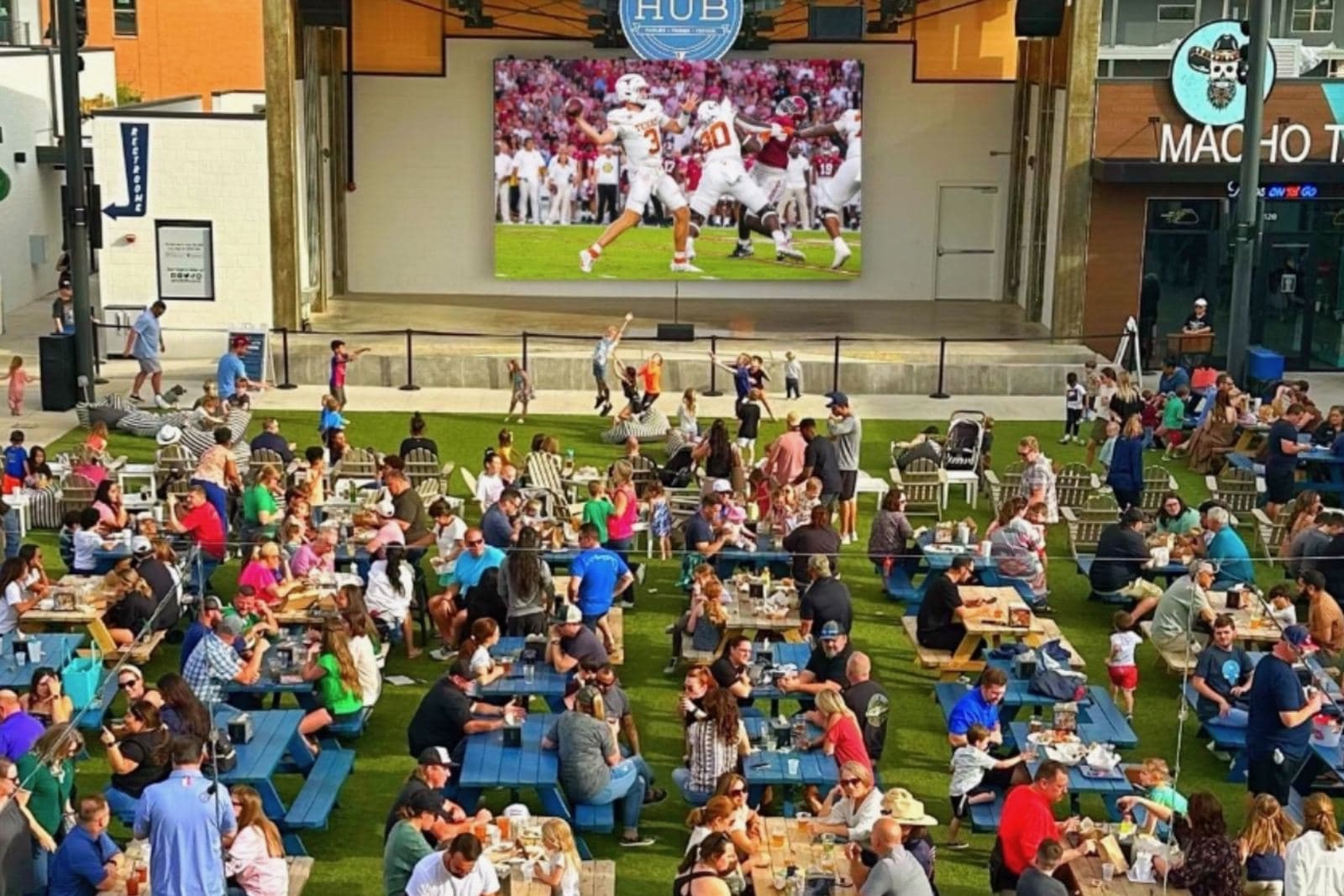
6. Watch parties. The big game on a screen on the plaza or in a restaurant tenant's room, with the food to match. A season of them is a season of Saturdays the center already owns.
7. Sit-down dining as the anchor. Placer.ai's December 2025 Mall Index found open-air shopping centers led the mall formats over the 2025 holidays, with fourth-quarter visits up 2.0 percent year over year, and credits the format's sit-down and alcohol-forward dining alongside layouts that make a quick trip easy. Source: Placer.ai, January 2026.
8. Community partners. Corporations who bring us their annual traditions, charities who build their biggest nights with us, and schools, academies, and arts organizations whose recitals and showcases need a stage. Those events happen every year. The only question is where. A dance-school showcase brings every family in the school, and they eat before and after.
9. Seasonal tentpoles. A holiday lighting weekend, a spring festival, a summer concert series: the moments people drive in for and tell their friends about. Festivals layered in so there is something for everyone, and memorable experiences that drive more traffic long term.
10. Your own list. Every event is a reason for someone to give the center their email or their number. The growth of your audience on email, text, and social is one of the numbers a calendar is judged on, and it is the only channel the center owns outright.
Event ideas for a mall
An enclosed mall has the same calendar with a different stage. Center court takes the live music and the showcases. The food court takes the family night, with a screen for the movie and the tenants running the kids-eat specials. The parking field takes the market, the food truck rally and the car show. A vacant anchor box, while it waits for its next use, takes the holiday market or the indoor festival the weather cannot cancel. Mall marketing has long leaned on the tenants' own sales events; the ideas above give the landlord a calendar of its own.
How to tell which shopping center marketing ideas worked
At our own venues the measures were traffic and sales: orders and receipts on programmed days against the days without. The same measures work at your center, on the numbers you already run it on: tenant sales, traffic, and the growth of your audience on email, text, and social. After each event, the follow-up call to the tenants asks one question, did it work for you? Keep the ideas that pass and drop the ones that do not. Measured, not modeled.
Who runs the calendar at a shopping center
Tenants run their own in-store experiences. The common area is the owner's, and on most centers nobody has that job. We plan, book, and produce; the vendor network, the talent, the sponsors and the schedule are built and running today, as an operating team behind yours. Our page for retail and lifestyle centers describes the engagement, how event programming works walks through the five phases, and in-house or outsourced event programming weighs building the department yourself. We are not a marketing agency; promotion is scoped and priced as its own service when you want it, and your brand approves all of it.
Frequently asked questions
What are some event ideas for a mall?
Live music and school showcases in center court, a family movie night in the food court with the tenants' kids-eat specials, a makers market or food truck rally on the parking field, a watch party for the big game, and a holiday market in a vacant anchor box.
What are pop-up stores in malls?
Short-term shops in a vacant suite, a kiosk or a market stall, usually let to a local maker or an online brand for a season. For a landlord they prove which categories draw before a lease is signed, and they give regular visitors something new to see.
How do you increase foot traffic in retail?
Give people a reason to come that is not a purchase, on a schedule they can count on. A named weekly night, monthly anchors like a movie or a market, and seasonal tentpoles, each paired with the tenants, move traffic in a way one big signature night often does not.
Does shopping center marketing need a big budget?
The ideas that move foot traffic are mostly inexpensive. A weekly acoustic set, a trivia night built with a restaurant tenant and a makers market cost little each, and vendors and partners carry much of the rest. The expensive part is the time to plan, book and run them every week, which is the part most owners do not have.
Who runs the events at a shopping center?
The HUB Experience Company does, as an operating team behind yours: we plan, book, and produce, and we run every event day from a call sheet. Whether that beats building an events department of your own is the question we answer in in-house or outsourced event programming.
Get in touch.
Tell us about the center. We listen first, propose what fits, and shape the engagement around what you actually need.