Downtown revitalization: the role of events in bringing people back
By Tully Zeitlin · Published
Downtown revitalization is the work of making a downtown somewhere people go again: to shop, to eat, to live, and to spend an ordinary evening. Events are the part of that work that shows first, because buildings take years and a Thursday night takes a Thursday. This guide covers what downtown revitalization involves, the role events play in it, how to bring people downtown week after week rather than once a year, what it returns to the city, and who runs the calendar.
What downtown revitalization involves
The most widely used framework in the United States is Main Street America's, which carries out a district's strategy through four points: economic vitality, design, promotion and organization. Promotion, in that framework, is the point that positions the downtown as the center of the community and the hub of its economic activity, and events are its everyday tool. Main Street America reports that since 1980 the Main Street movement has produced $124.67 billion reinvested locally, 188,583 net new businesses and 852,443 net new jobs, with $9.4 billion reinvested in 2025 alone across 1,303 programs. Those are the movement's own figures, self-reported by its programs, and they describe the whole effort: the buildings rehabilitated and the businesses recruited as much as the events. What the figures say to a city is that a downtown comes back when somebody is assigned to it, year after year.
The role of events in downtown revitalization
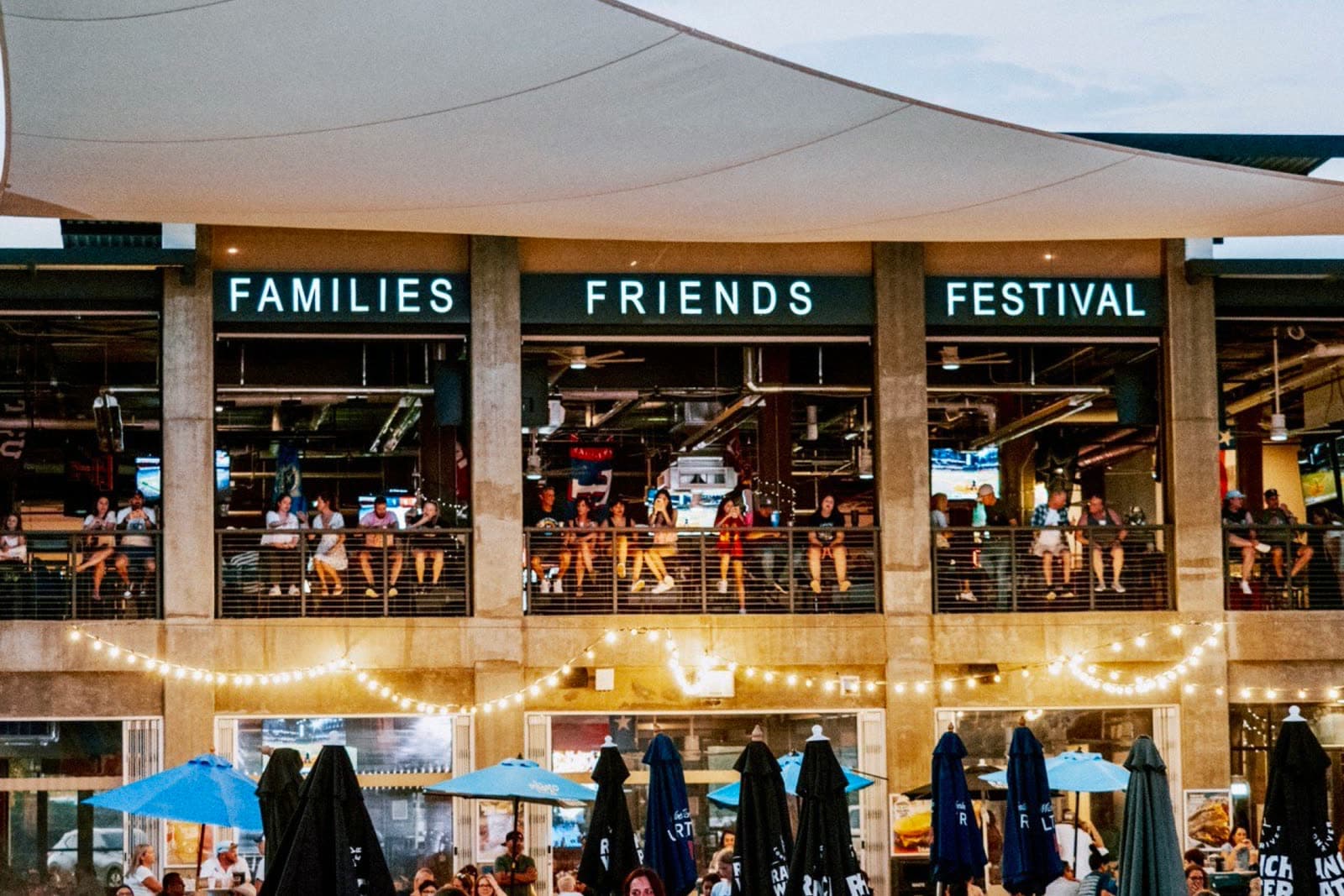
A downtown with a weekly rhythm is what brings people downtown on the nights the restaurants need them. One festival a year puts a city on the map for a weekend. A calendar keeps it there. Events do three things for a downtown that design cannot: they give people a reason to come on a specific night, they put them in front of the storefronts that are open, and they make the street feel full, which is what the other three points are working toward. Events increase tax revenue, attendance and the vitality of a downtown people have a reason to visit. For a city, the return is visible. More visits. Longer stays. Higher sales at local businesses and the tax revenue that follows. Residents who feel the city is theirs. Families who choose to live there. Programming is how public spaces earn the investment that built them.
How to bring people downtown, week after week
Every calendar we build stands on one architecture: a weekly rhythm people can count on, monthly anchors that spike traffic, and seasonal tentpoles that put a place on the map, drawn from a working catalog of 150-plus formats across twelve categories, tuned to each place and its seasons. For a city that is the weekly night on the plaza people plan around, the monthly market or concert that becomes a habit, and the seasonal tentpoles the whole region marks on its calendar. Often not one thing at a time: a movie night is the feature, the character moment, face painting on the plaza and the local restaurants paired in. Layers are what turn an event into a draw. Food is programming too: the restaurants and the market stalls are the reason to stay after the band. Community engagement is a second lever: corporations who bring their annual traditions, charities who build their biggest nights with us, and schools, academies and arts organizations whose recitals and showcases need a stage. Those events happen every year. The only question is where. The town's own traditions, held downtown, are the fastest way to make downtown the town's place. The overnight visitors a calendar draws are why this work sits beside our work with hotels and resorts.
Who runs downtown events
In most cities, three groups: the main street or downtown program, parks and recreation, and a downtown development authority or business improvement district where one exists. City staff in parks and recreation and on main street already produce a strong calendar, and do it well. What every team like that runs short of is time: the booking, the vendor-by-vendor scheduling, the production, and the hundred calls behind every good Saturday, on top of everything else on their plates. A business improvement district or downtown development authority already has the mandate. What it often lacks is a programming team. The options are the same ones a developer faces after a ribbon cutting: add the role in house, hire a producer date by date, or bring in a placemaking and event programming company. We work alongside the teams producing events now, at whatever scale helps. We plan it, book the talent and vendors, write the day-of instructions, and produce it with your staff or our own people on the ground. Your team keeps the relationships and the credit; we take the load. The comparison with hiring a special events coordinator, including what the role costs a city, is in in-house or outsourced event programming. Reported against the numbers the city already watches: attendance, visits, local business activity, and resident feedback. Measured, not modeled. The whole of our work with cities and municipalities is on its own page, with the five phases on how event programming works; why residents stay is on quality of place, and the counting is on the economic impact of events.
Frequently asked questions
What is a downtown revitalization project?
A sustained effort to make a downtown somewhere people go again, organized in the Main Street framework around economic vitality, design, promotion and organization, with events as promotion's everyday tool.
How do you revitalize a downtown?
Assign someone to it, year after year, and work all four points at once: recruit and keep businesses, fix the buildings and the street, bring people downtown with a calendar they can count on, and build the organization and partners that keep it going.
How do you bring people downtown?
With a weekly rhythm people can count on, monthly anchors that spike traffic, and seasonal tentpoles the region marks on its calendar, each one layered: the band, the market, the kids' activity and the restaurants paired in.
How do small towns thrive?
Main Street America's figures since 1980 come from small towns, mid-sized communities and urban districts alike, and the pattern is the same at every size: somebody is assigned to the downtown, and the calendar gives people a reason to be there on an ordinary night.
Do downtown events increase tax revenue?
Yes. Residents who go out at home instead of in the next town, and visitors who drive in for what is happening, spend at local businesses, and the tax revenue follows.
Who runs downtown events?
The main street program, parks and recreation, and the downtown authority or business improvement district, and they run short of time, not ideas. We work alongside the teams producing events now, at whatever scale helps, with the city keeping the relationships and the credit.
Get in touch.
Tell us about the downtown. We listen first, propose what fits, and shape the engagement around what your council can approve.