The future of shopping centers: what replaces the mall, and what fills it
By Tully Zeitlin · Published
The future of shopping centers is already visible in the traffic data: the centers that are growing are the ones people visit for reasons other than a purchase. What replaces the enclosed, department-store-anchored mall is not one format. It is a mix: open-air centers with sit-down restaurants at the center of them, mixed-use districts where retail is the ground floor of somewhere people live and work, and redeveloped malls that keep the strong half and rebuild the rest. What all three have in common is a calendar, which is the part this page is about. The owner's version of that calendar is in our guide to experiential retail.
What the 2025 traffic data says about the future of shopping centers
Two reads from the same source, both from Placer.ai's Mall Index, which tracks visits to 100 top-tier indoor malls, 100 open-air shopping centers and 100 outlet malls using a panel of mobile devices.
Open-air shopping centers were the only mall format whose visits consistently met or exceeded pre-pandemic levels over the two years to mid-2025, with second-quarter 2025 visits 2.7 percent above the second quarter of 2019. Indoor malls narrowed the gap in the same quarter, to 1.1 percent below 2019, their strongest showing since 2020. Source: Placer.ai, June 2025 Mall Index, published July 7, 2025.
Over the full year 2025, indoor malls were the only format to post visit gains in all four quarters, which Placer.ai reads as a shift from recovery into growth. Open-air centers led over the holidays, with fourth-quarter visits up 2.0 percent year over year and December up 1.5 percent, which Placer.ai credits to sit-down and alcohol-forward dining and to layouts that make a quick trip easy. The same report finds families are the backbone of mall traffic and that malls compete for discretionary spend, not everyday shopping trips. Source: Placer.ai, December 2025 Mall Index, published January 7, 2026.
Read together: the top tier of indoor malls is growing again, open-air centers held their ground through the whole period, and the format that wins a given season is the one with the restaurants and the reasons to linger. The weak end of the market is a different story, and it is where the redevelopment happens.
What is replacing the mall
Three things, usually in combination.
The open-air center. A main street or a green instead of a corridor, restaurants with patios where the department store used to be, and a plaza that can hold a stage. We cover what makes one work on its own page about lifestyle centers.
The mixed-use district. Retail as the ground floor of residential, office and a hotel, so the people who fill the restaurants on a Tuesday already live or work upstairs. The owner's ledger changes with it: tenant sales matter, and so do residential leasing, office retention and rents. Our page for mixed-use developments is written for that owner.
Mall redevelopment. Keeping the half of the property that still draws, taking down the dead anchor and the half-empty wing, and rebuilding them as apartments, offices, a hotel, a grocery, a clinic, or an open-air block that faces the street. The survivors in the first paragraph are the proof that the top of the market did not need this. The rest of it does, and the question each redevelopment answers is the same: what will people come here for, on an ordinary weeknight, once the construction fence comes down?
What fills the shopping center of the future
A beautiful center with an empty calendar is a rendering you can walk through. The formats above change what a center is; the calendar is what makes it somewhere. Every calendar we build stands on one architecture: a weekly rhythm people can count on, monthly anchors that spike traffic, and seasonal tentpoles that put a place on the map, drawn from a working catalog of 150-plus formats across twelve categories, tuned to each property, its tenants, and its seasons.
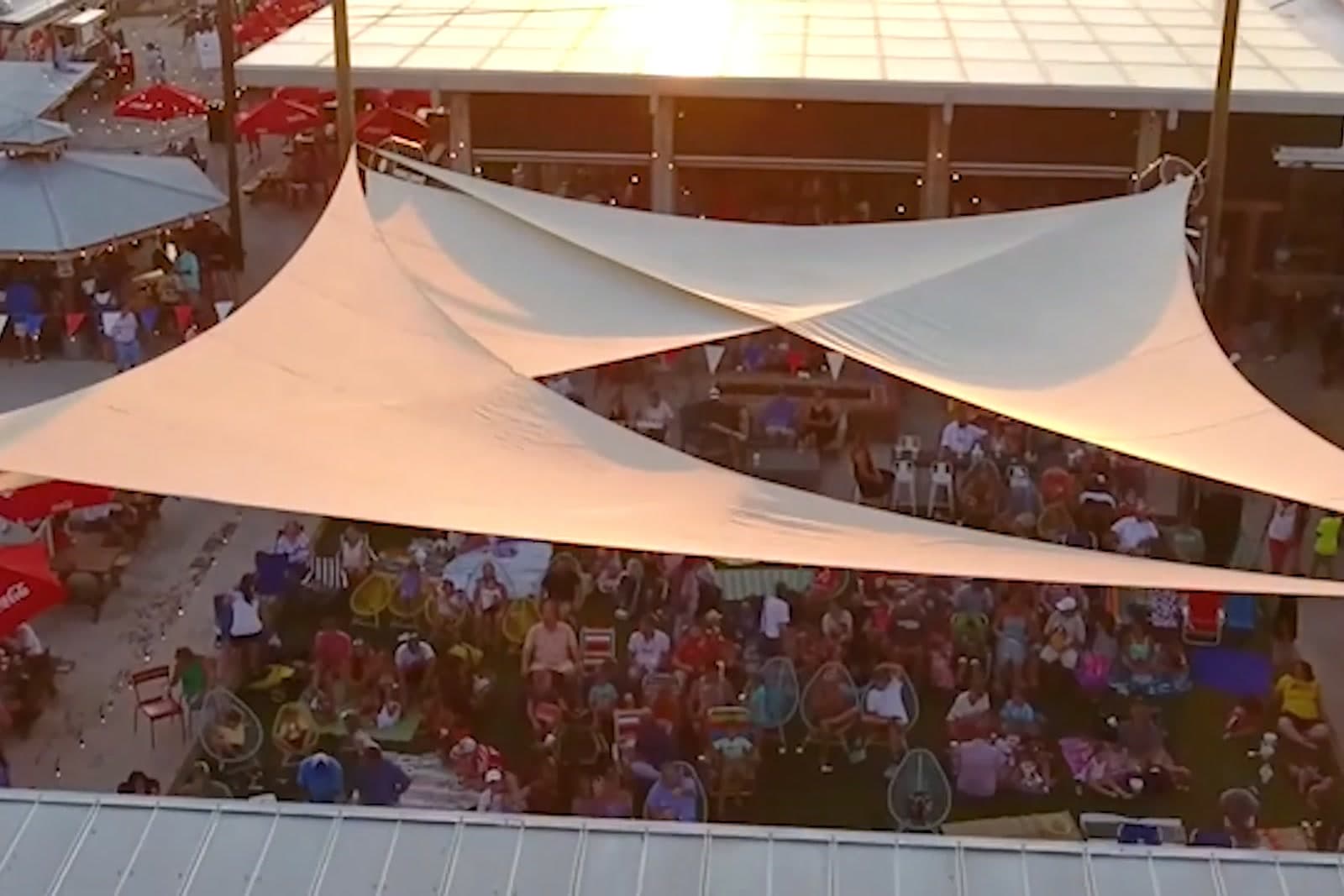
In practice that is live music on the plaza every Thursday as the day cools, a makers market every Saturday morning, a movie on the lawn once a month, the big game on the screen with the food to match, and the holiday lighting weekend people drive in for. We build events with the restaurants and shops rather than around them. The food is programming. A center that sells more because people come for the day is the version of the future the traffic data is describing, and it is the one a center can choose rather than wait for. Whether that center is also the town's third place, and what placemaking means once the ribbon is cut, are the two pages beside this one.
Who does this for a center
Tenants run their own in-store experiences. The common area is the owner's, and on most centers nobody has that job. We plan, book, and produce; the vendor network, the talent, the sponsors and the schedule are built and running today, as an operating team behind yours. Our page for retail and lifestyle centers describes how that engagement works at a center.
Frequently asked questions
What is replacing shopping malls?
Open-air centers built around restaurants and a plaza, mixed-use districts where retail is the ground floor of homes, offices and hotels, and redeveloped malls that keep the strong half of the property and rebuild the rest as housing, offices, a hotel or a street-facing block.
How much longer will malls be around?
The top tier is growing again: in 2025, indoor malls were the only format in Placer.ai's index to post visit gains in all four quarters. The weak end of the market is being redeveloped. Mall-count forecasts vary widely by source, so this page does not repeat one.
Is it true that not all shopping malls are struggling?
Yes. Placer.ai's 2025 data shows top-tier indoor malls growing on a full-year basis and open-air centers above their 2019 visit levels. The split is between centers people visit for reasons other than a purchase and centers they do not.
What is mall redevelopment?
Rebuilding part or all of an enclosed mall for new uses: apartments, offices, a hotel, a grocery, a clinic, or an open-air block that faces the street, usually while keeping the wing that still draws. The project succeeds or fails on whether people have a reason to come to the new place every week.
Where does programming fit in the future of shopping centers?
It is the part that makes a redeveloped or open-air center somewhere rather than anywhere: a weekly rhythm, monthly anchors and seasonal tentpoles, paired with the restaurants and shops so the traffic lands on their registers.
Get in touch.
Tell us about the center. We listen first, propose what fits, and shape the engagement around what you actually need.