Placemaking examples: what placemaking looks like when it runs every week
By Tully Zeitlin · Published
The best placemaking examples share one trait: something happens there every week. A park, a plaza or a main street becomes a place when people can count on it, and the examples below, two public parks and four kinds of private property, became places through what happens on them after they were built, not through the build itself. This page walks through each example and what it gets right, so an owner can see the pattern before building a lawn and hoping. What placemaking is, and why so much of it stops at the ribbon cutting, is on our guide to placemaking.
Two placemaking examples from public parks
Bryant Park, New York. In the early 1980s the park was unkempt and perceived as unsafe by office workers and tourists. Project for Public Spaces began by studying how the park was actually used, through observation and interviews, and in 1981 delivered a report of design and management strategies that created opportunities for programming and sustained revenue. The report went to the Bryant Park Restoration Corporation, the park's management entity, supported in part by a business improvement district, which turned the recommendations into reality. Project for Public Spaces now describes the park as the city's town square, with big public events and small private moments alike. Source: Project for Public Spaces, Bryant Park.
What it gets right: the fix was management and programming as much as design, with a dedicated entity whose job the park became, and a revenue model that kept the calendar running.
Campus Martius Park, Detroit. When Project for Public Spaces began working there in 1999, the square had become little more than an unfriendly traffic island. The park opened in 2004, and in 2013 an underused lawn at its southern end became a seasonal beach with sand, colorful seating, a bar and a deck. Programming at the beach includes aerobics classes, sandcastle building, live music and informal play, and a seasonal ice rink keeps locals coming in winter. Project for Public Spaces reports that the park now draws more than two million people a year and that the surrounding district has attracted 20,000 new jobs and over two billion dollars of real estate investment. Source: Project for Public Spaces, The Beach at Campus Martius. Those are the park's own partners' figures, reported by the organization that worked on it, and the jobs and investment cannot be credited to the park alone.
What it gets right: a park with something to do in every season, run by a downtown partnership that treats the calendar as the product, in the middle of the district whose value it helps carry.
Placemaking examples on four kinds of property
The parks above are public. The same pattern runs on private property, where the owner's lawn, plaza or main street came with the project and the question is what happens on it.
We created The HUB on 30A near Seaside and Rosemary Beach in 2014 and expanded to North Dallas in 2022. After more than a decade operating The HUB and producing thousands of events, we launched The HUB Experience Company, focused on creating the programming, activations, events, and experiences that make destinations truly come alive.
Here is what this looks like on four kinds of property. Each one is an illustration of the pattern, not a report on a particular place.
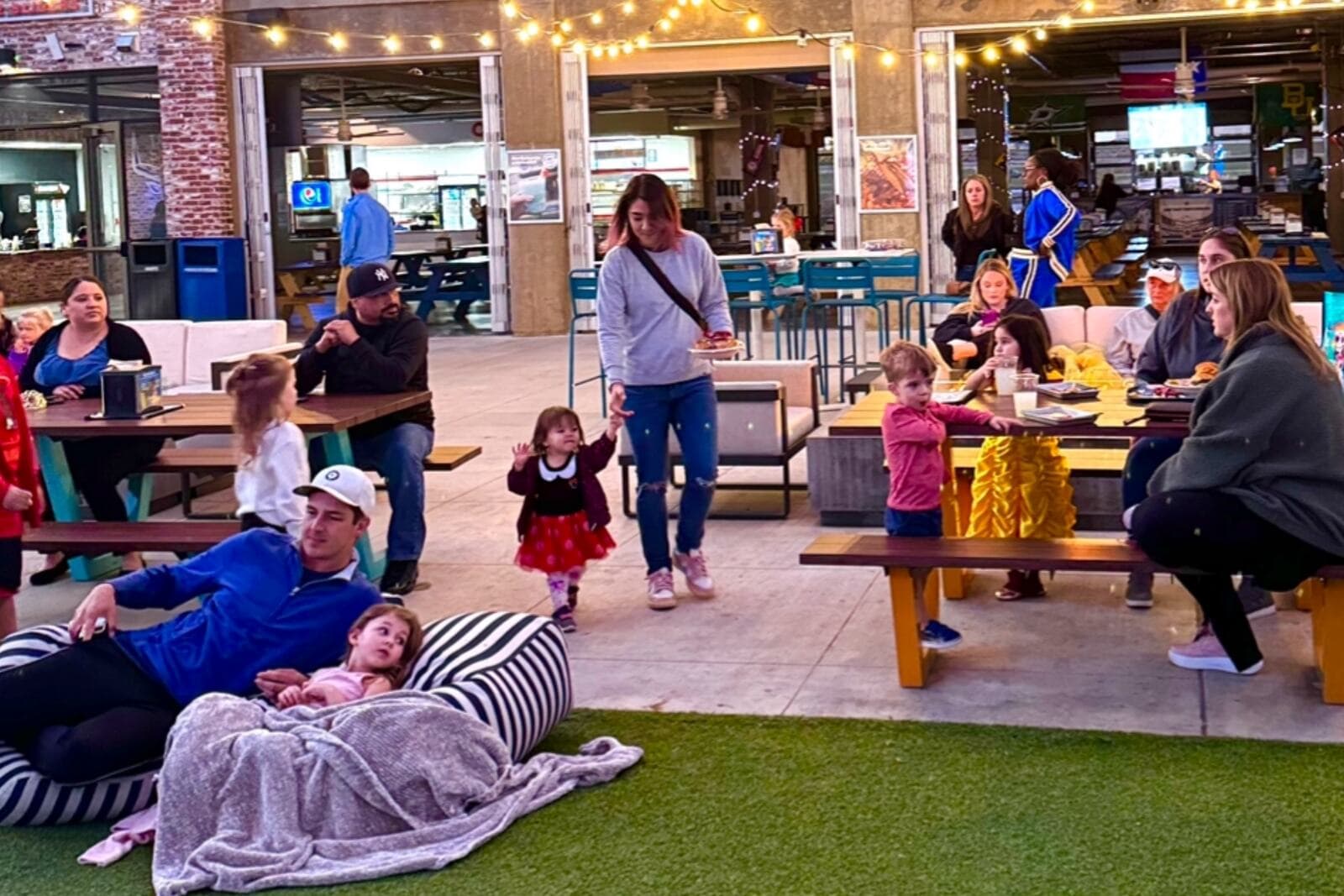
A mixed-use plaza with a weekly night market. The plaza came with the project. The example is the market every Thursday as the day cools: a band on the stage, fifteen to twenty local makers, the restaurants' patios open behind them, and a kids' activity before dark. The same night, every week, is what turns a visit into a habit. What it gets right: the weekly rhythm comes first, and the food is programming too.
A lifestyle center main street with a named series. The street was built as a stage and used as a thoroughfare. The example is a named acoustic series on the patios, a trivia night built with a restaurant tenant, a family evening with a movie and a character moment, and a market morning for local makers, each one small, inexpensive, and placed on the nights the tenants need it most. What it gets right: tenants are paired into every moment, so the traffic is aimed at their registers.
A downtown with a season of its own. A city square, a stage the parks department wired, and a calendar nobody owned. The example is the season: a spring kickoff for families, a summer concert series, the big games on a screen in the square, a holiday lighting weekend, run with the parks and the main street organizations at whatever scale helps. What it gets right: it gives residents a reason to stay in town on the nights that used to send them to the next one, and events increase tax revenue.
A hotel lawn that locals use. The lawn and the stage were there for weddings. The example is live music on the stage every week, a local act at golden hour that people can talk over, a family night with a movie, and festival days built in layers across the property, with the calendar stepping back when a group owns the hotel. What it gets right: it is built to bring locals to the outlets in the quiet months and to make the property the destination, not the place people stay while doing something else.
What every placemaking example has in common
Programming is the first engine: it creates the draw. Community engagement is a second lever. Developing trusted relationships with corporations who bring us their annual traditions, charities who build their biggest nights with us, and schools, academies, and arts organizations whose recitals and showcases need a stage. Those events happen every year. The only question is where.
Every calendar we build stands on one architecture: a weekly rhythm people can count on, monthly anchors that spike traffic, and seasonal tentpoles that put a place on the map, drawn from a working catalog of 150-plus formats across twelve categories, tuned to each property, its tenants, and its seasons. The parks in the first section have the same three layers under different names. And each one would be measured on the numbers its owner already runs on, which is the subject of measuring placemaking ROI.
The four types of placemaking
Planners sort placemaking into four types, a scheme from the Michigan State University Land Policy Institute that Main Street America reproduced in its Winter 2019 State of Main. Standard placemaking is the broad, long-term work of creating public spaces people care about through engagement and design. Strategic placemaking is revitalization aimed at a specific economic goal, such as attracting talented workers. Creative placemaking is revitalization led by arts and cultural initiatives. Tactical placemaking tests low-cost, short-term changes to gauge what works before committing permanent resources. Source: Main Street America, "Activating the Main Street Approach Through Placemaking," State of Main, Winter 2019.
The examples on this page are mostly standard placemaking by that scheme, with a tactical streak: a seasonal beach, a named weekly series and a makers market are all cheap ways to find out what a place wants before anything permanent is built. The scheme is about how a place is made. Our work is about what happens there once it is, which is the half the scheme leaves to the owner.
Who runs placemaking after a project opens
Before opening, placemaking belongs to designers and planners. After opening, the question gets harder, and most projects never answer it. The owner has four options for that job: build the department in house, give it to the property manager on top of the day job, hire an event producer one event at a time, or bring in a placemaking and event programming company that plans and runs the calendar as an operating partner. We are the fourth. Event programming describes what we run, mixed-use owners start with our page for mixed-use developments, and cities with cities and municipalities. If the place is meant to be the town's third place, that page explains why so many new ones sit empty.
Frequently asked questions
Can you give me an example of placemaking?
A city park that went from an unsafe block to a town square through programming, management and a revenue model, as Bryant Park did. Or a mixed-use plaza with a market every Thursday, a band on the stage and the restaurant patios open, which is what the same pattern looks like on private property.
What are examples of placemaking in real estate?
A weekly night market on a mixed-use plaza, a named acoustic series on a lifestyle center's main street with the tenants paired in, a downtown square with a season of family nights and concerts, and a hotel lawn with live music every week, built to bring locals to the outlets.
What are the four types of placemaking?
Standard, strategic, creative and tactical, in the Michigan State University Land Policy Institute scheme: broad long-term public-space work, revitalization aimed at an economic goal, arts-led revitalization, and low-cost short-term tests before permanent investment.
What is the difference between placemaking design and placemaking programming?
Design is the work that ends at the ribbon cutting: the master plan, the landscape, the stage, the tenant mix. Programming is the work that begins at the ribbon cutting and never ends: the weekly night, the monthly anchor, the seasonal weekend. The examples on this page are all about the second half.
Who is responsible for placemaking after a project opens?
Whoever is given the job. On most projects nobody is, so the calendar stays empty. The options are an in-house department, the property manager, an event producer, or a placemaking and event programming company that runs the calendar as an operating partner.
Get in touch.
Tell us about the place. We listen first, propose what fits, and shape the engagement around what you actually need.