Placemaking for real estate developers: how a plan becomes a running calendar
By Tully Zeitlin · Published
Placemaking for real estate developers is two jobs, and most plans only fund the first. The first is the design of the space: the lawn, the plaza, the stage, the street. The second is the programming of it: what happens there, week after week, once it opens. This guide is about the second job: how a developer turns a placemaking plan into a calendar that runs, who does that work, and what it returns on the project's own numbers.
Placemaking strategies that survive opening day
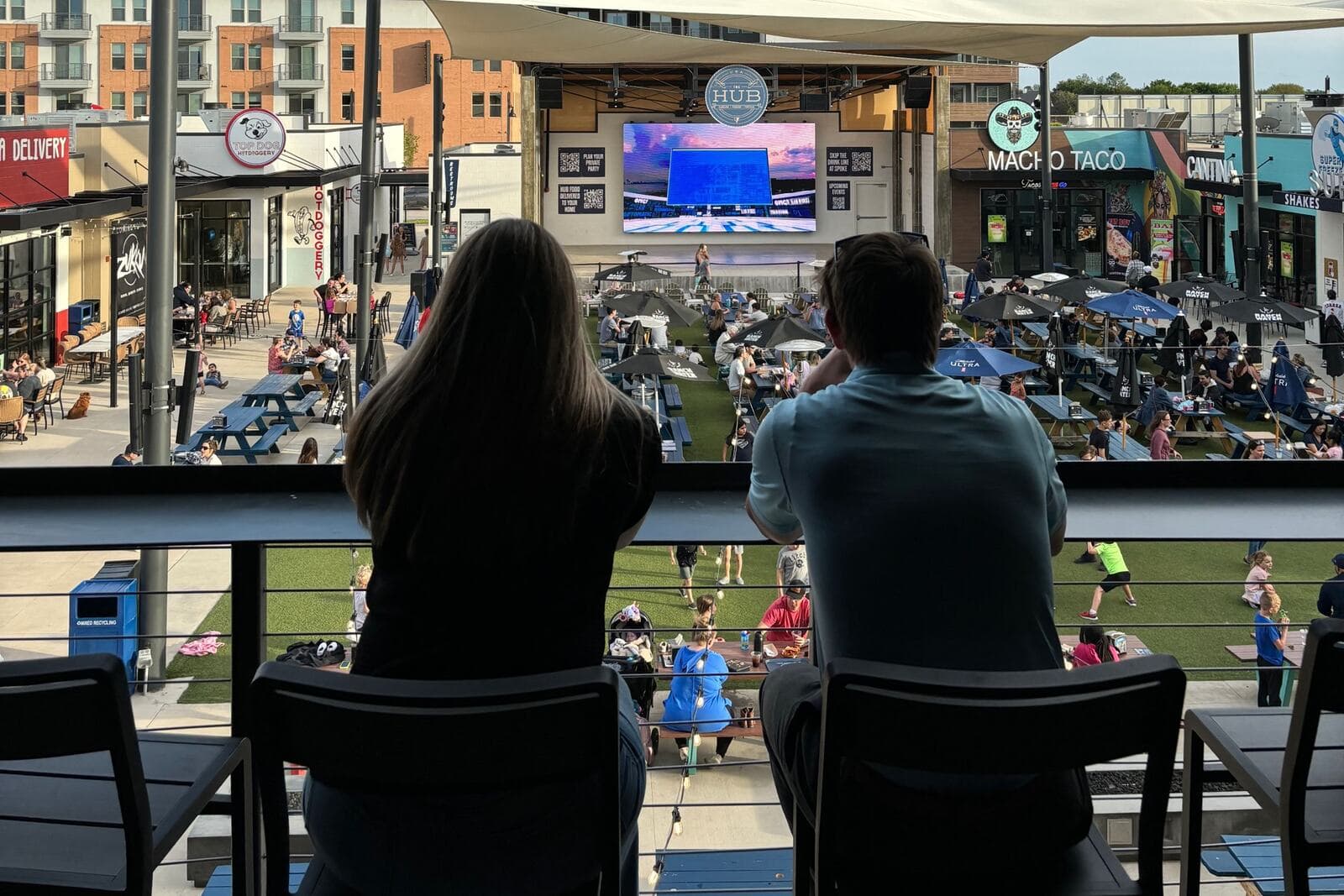
Every placemaking strategy that works after opening has the same shape. Every calendar we build stands on one architecture: a weekly rhythm people can count on, monthly anchors that spike traffic, and seasonal tentpoles that put a place on the map, drawn from a working catalog of 150-plus formats across twelve categories, tuned to each property, its tenants, and its seasons. The weekly rhythm is the strategy that matters most and gets funded least: the same good night every week, until people plan their week around it. Often not one thing at a time: the layered draw. A movie night is never just a movie. It is the feature with a character moment, face painting on the green, and the tenants paired in. Food is programming too: events built with the restaurants and shops rather than around them. Community engagement is a second lever. Developing trusted relationships with corporations who bring us their annual traditions, charities who build their biggest nights with us, and schools, academies, and arts organizations whose recitals and showcases need a stage. Those events happen every year. The only question is where.
From the master plan to the first season
The best time to program a place is before the first visitor arrives. Some design choices decide what the calendar can do later: power and water at the stage, a lawn that drains, a screen the patios can see, shade and seating nobody has to pay for, and a street that can close for a market. For a property still in design, the Discovery and Setup Month can run now, while the plans can still change. What that phase produces is the real calendar. We walk the property, meet the tenants, study the neighborhood and what already runs around it, and learn which nights need help. Then we build the calendar with your team, specific to the place. A detailed quarterly plan, with its budget, brought to your team for approval, plus a full-year view for the tentpoles. For a developer that is three things the master plan does not produce on its own: the programming architecture, the first-season calendar, and the programming story for the leasing package. A programmed first season gives leasing a documented calendar that helps recruit the tenants you want, and gives residents a place they treat as their front porch.
Who runs placemaking for real estate developers after the ribbon is cut
Everyone building today calls it placemaking. The lawn gets poured. The stage gets wired. The renderings are full of people. Then the ribbon is cut, and the calendar stays empty. That is not because owners stop caring. It is because nobody on the team has that job: property teams run the property, leasing leases, and there is no department for Saturday night. The developer has four options for that job: build the department in house, give it to the property manager on top of the day job, hire an event producer date by date, or bring in a placemaking and event programming company. The HUB Experience Company is a placemaking and event programming company for real estate owners and developers. An operating team behind yours. You keep the brand, the voice, and the final say on every line of the calendar. We carry the work that makes the calendar real: planning, booking, vendor and talent management, the daily run of show, and the tenant follow-through. We run execution on paper. A detailed call sheet for every event day, down to where the vendor sets up and when the water gets to the band. The ground game is your choice: your on-site team executes the call sheet as written, or The HUB Experience Company staffs the ground with experience managers, whichever fits each event. Whether that beats building the department yourself is the question we answer in in-house or outsourced event programming.
What placemaking returns on the developer's ledger
The economics land on your P&L, not just a marketing line. Increased traffic. Longer dwell times. Higher sales per square foot. Stronger tenant retention. Higher rents. Faster leasing. Renewed community relevance. That is what the experience layer is for. For a mixed-use development, that means the common areas earn their keep: faster lease-up and absorption, higher rents on the residential and the commercial, lower tenant and resident churn, and common-area economics that contribute revenue instead of consuming cost. Reported against the numbers you already run on: visits, tenant sales, leasing and renewals. Measured, not modeled. At our own venues the measures were traffic and sales: orders and receipts on programmed days against the days without. How to read those numbers is its own guide: measuring placemaking ROI.
Who we are
We created The HUB on 30A near Seaside and Rosemary Beach in 2014 and expanded to North Dallas in 2022. After more than a decade operating The HUB and producing thousands of events, we launched The HUB Experience Company, focused on creating the programming, activations, events, and experiences that make destinations truly come alive. Today, we partner with developers, owners, and operators to transform properties into places people want to return to again and again while driving meaningful business outcomes such as increased traffic, longer dwell times, faster absorption, stronger tenant engagement, and higher rents. We do this the same way we've done it at The HUB: through year-round programming that includes live events, festivals, seasonal activations, watch parties, family programming, brand partnerships, tenant collaboration, and community-driven experiences that create consistent energy and visitation. Placemaking itself, and what keeps a place alive after it opens, has its own guide, and so does the third place many of these projects are built to be. Mixed-use developers start here.
Frequently asked questions
What are some effective placemaking strategies?
The ones that run after opening: a weekly rhythm people can count on, monthly anchors that spike traffic, and seasonal tentpoles that put a place on the map, each one layered so a family has several reasons to come and to stay. Food is programming too, and community partners bring the events that happen every year.
What is placemaking in real estate?
Placemaking is the practice of shaping a physical space so it becomes a place people choose, return to, and remember. In real estate it has two halves: the design of the space, which is capital and ends at the ribbon cutting, and the programming of it, which is operating and begins there.
When should a developer start placemaking programming?
Before opening. For a property still in design, the Discovery and Setup Month can run now, while the plans can still change.
Who runs the calendar after a project opens?
Whoever is given the job. On most projects nobody is, so the calendar stays empty. The options are an in-house department, the property manager, an event producer, or a placemaking and event programming company.
How does placemaking help lease-up and absorption?
It gives leasing something to sell besides the finishes. A documented calendar helps recruit the tenants you want, residents choose the place that feels alive over the one that is maintained, and tenants who see the traffic renew.
How do you measure placemaking?
On the numbers the owner already runs the property on: visits, dwell time, food and beverage, tenant sales, leasing and renewals. At our own venues the measures were traffic and sales: orders and receipts on programmed days against the days without.
Get in touch.
Tell us about the place. We listen first, propose what fits, and shape the engagement around what you actually need.